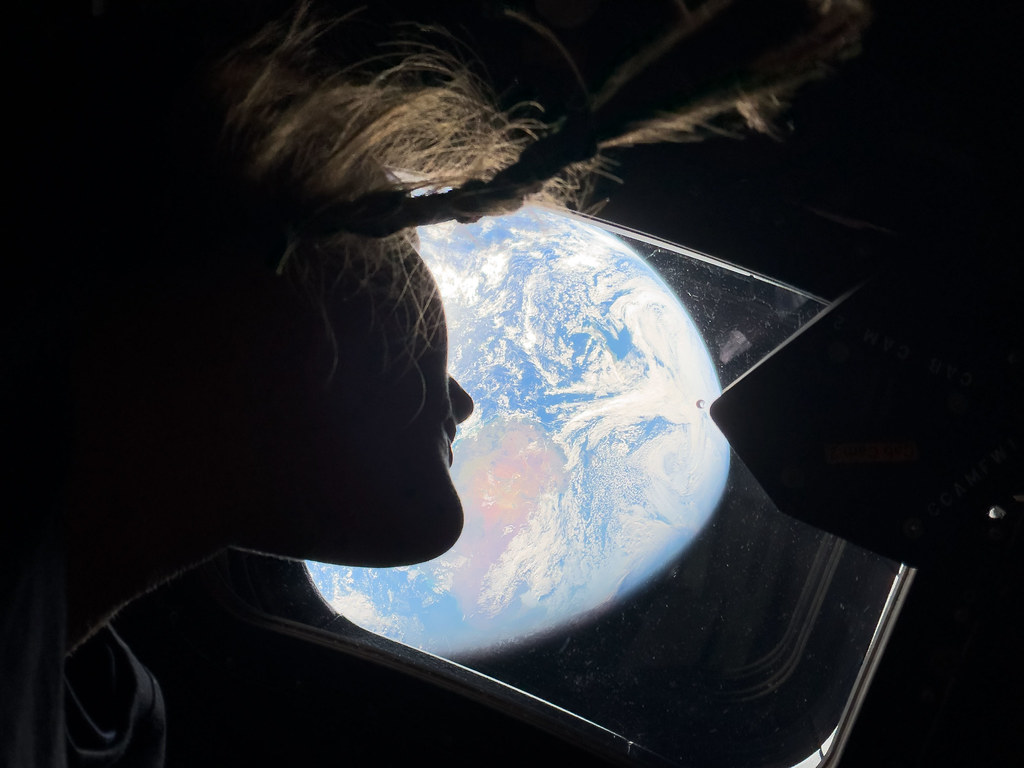
For the first time in more than 50 years, astronauts are travelling beyond low Earth orbit. And they are doing so equipped with a smartphone: the iPhone 17 Pro Max. This article details how a consumer device passed NASA’s rigorous approval process, the impressive images captured from deep space, and the implications for the Apple ecosystem and the technology industry.
1. Artemis II: humanity’s return to the Moon
On 1 April 2026, at 6:35 p.m. EDT, the SLS rocket lifted off from Kennedy Space Center in Florida carrying Orion CM-003 Integrity with four crew members on board: commander Reid Wiseman, pilot Victor Glover, mission specialist Christina Koch and Canadian Space Agency astronaut Jeremy Hansen. The mission, of approximately 10 days, marks the first time since Apollo 17 in 1972 that human beings have travelled beyond low Earth orbit.
Among Orion’s technology equipment is an unexpected element: four units of Apple’s iPhone 17 Pro Max — one per crew member — making them the first modern smartphones officially approved by NASA for a crewed deep space mission.
NASA’s 4-phase approval process
- Safety panel: initial hardware evaluation.
- Risk analysis: identification of potential device hazards in the space environment.
- Mitigation plan: strategies to address identified risks including permanent aeroplane mode, storage in reinforced suit pockets, Velcro fastening.
- Validation: verification that mitigation measures work correctly.
Safety measures implemented
- Permanent aeroplane mode: all cellular, Wi-Fi and Bluetooth connection chips strictly disabled.
- Physical security: phones stored in reinforced suit pockets and fixed with Velcro or specialised supports.
- Glass protection: NASA verified that iPhone 17 Pro Max’s Ceramic Shield 2 meets required durability standards.
- Radiation and vacuum testing: devices tested for resistance to cosmic radiation, vacuum conditions and extreme launch vibrations.
Impressive photographs from deep space
NASA has shared three impressive photographs taken with iPhone 17 Pro Max, showing commander Reid Wiseman and specialist Christina Koch contemplating Earth through Orion’s main cabin windows. The “Hello, World” photo — a complete view of Earth with auroras over both poles — has rapidly become one of the decade’s most iconic space photos. During the lunar flyby on 6 April, commander Wiseman captured an impressive image of the lunar surface using the iPhone 17 Pro Max’s 8x zoom, showing the Chebyshev crater on the far side of the Moon.
Implications for space technology and the Apple ecosystem
The inclusion of iPhone 17 Pro Max in Artemis II signals a fundamental shift: consumer technology is beginning to earn a place in space missions. The approval of a smartphone launched barely seven months earlier represents unprecedented acceleration.
- Unprecedented marketing: The advertising value of “Shot on iPhone” from deep space is incalculable.
- Durability validation: NASA certification is the ultimate proof of iPhone robustness.
- Precedent for future missions: This success opens the door to greater integration of consumer devices in space missions.
As Apple Premium Technical Partner, at Setek Consultants we have been helping companies deploy and manage Apple devices in the most demanding environments. If NASA trusts iPhone for its most ambitious mission in half a century, it is because it recognises in Apple a symbol of innovation, reliability and excellence. An ecosystem capable of performing at its best, from the depths of space to the heart of your enterprise.